


Season 3
They were typical teenage boys when they lived in Yorkton in the 1970s, 80s, and into the early 90s. They came from different backgrounds, attended school here, took part in a variety of activities, pursued different goals, and left when they completed high school, four ending up in Alberta and one in Saskatoon.
A common factor for these five young men from Yorkton is that they ended up at higher levels of politics – three are now members of Parliament, one was an Alberta cabinet minister, one is an Alberta cabinet minister. All of them represent conservative parties, although they were definitely exposed to a wider range of political views back then, as is inevitable when we’re talking about Saskatchewan.
They are Members of Parliament John Barlow, Brad Redekopp and Burton Bailey, as well as Alberta MLA and cabinet minister Searle Turton, and former Alberta MLA and cabinet minister Dave Rodney.
We agreed, from the start, that this podcast would not be about partisan political issues. Instead, we talked about their youth in Yorkton, their influences in life, and their views of how politics happens today.

Burton Bailey
Conservative party website | House of Commons listing
John Barlow
Conservative party website | House of Commons listing
Brad Redekopp
Conservative party website | House of Commons listing
Searle Turton
Alberta government website | Legislative Assembly of Alberta listing
Dave Rodney
Two-time Everest summiter shares friend's legacy in 'Finding Michael' film,
Rocky Mountain Outlook, March 16, 2023
What's it like to climb Mt. Everest twice?
Calgary Herald, October 10, 2015


Dan Calef was, and sometimes still is, Dan the Storyman, known locally as the story-telling head of the Yorkton public library from 1983 to 1999. He looked after story time for kids, and told stories on local television in a show that ended up being shown nationally, and then also on American television.
We turn the tables on him in this podcast by telling his story.
Here in Yorkton, he was also regularly seen to be running on the streets of Yorkton, easily recognizable by his long-ish hair and beard and his steady gait. Dan wasn’t just jogging. Less well-known than the story telling and the local running was the fact he took part in marathons in Canada and the United States, as well as what is known as ultra running – 100 kilometre runs, and events to see how far one could make it in 24 hours of continuous running.
We sat down with Dan and asked him to tell us the story of Dan the Storyman. But obviously his story is not complete without also taking a much closer look at the television show in which he appeared for five years, a local CICC/CTV production called Poetree and Friends.
Taking it one step further, any story about Poetree would not be complete without others who were closely involved: the show's producer Greg Popowich, and writers and puppeteers Debbie Hayward and Joyce Bagley. We talked with Greg, and thanks to Saskatoon-based actor Kevin Power, we were able to use audio clips from episode 92 of his podcast, SaskScapes, which prominently featured Debbie and Joyce.
Ultra Running Magazine listing of Dan Calef's notable race results.
Diary of a long-distance runner, by Dave Ramsay in Yorkton This Week, May 3, 1989 (PDF).
Dan Calef runs 125 miles in 24 hour race, by Tim Schafer in Yorkton This Week & Enterprise, November 1995 (PDF).
Poetree and Friends complete episode on YouTube, as seen on YTV in the late 1990s.
Poetree and Friends promotes fun, by Calvin Daniels in Yorkton This Week and Enterprise, January 1995 (PDF).
Poetree and Friends fondly remembered, by Calvin Daniels, Yorkton This Week / SaskToday.ca, May 14, 2021.
SaskScapes podcast episode about Poetree and Friends, hosted by Kevin Power.
About CanPro, which recognized Poetree and Friends with national awards. This is part of the History of Canadian Broadcasting website of the Canadian Communications Foundation.
Ultra running

Running in the snow, North Dakota.
Photo: Yorkton This Week

Dan is handed a drink by his daughter Sarah along the route at an ultra marathon in Bismarck, ND.
Photo: Yorkton This Week
Poetree and Friends


The librarian

Dan Calef, the chief librarian of a district south of Minneapolis MN, where he worked before coming to Yokton.

Storytime at the Yorkton Public Library in 1984, where he was Dan the Storyman.
Photo: Yorkton This Week
In the summer and fall of 2025, a couple of factors came together, one of them out of the blue, to tackle and do more about hunger and food insecurity in Yorkton.
The first was in early summer when the city of Yorkton hired a barriers to access co-ordinator, someone who was tasked with helping to set up local committees to address various barriers in the community. There was already a social housing committee dealing with homelessness and housing, but other needs and opportunities were identified, including food security.
What was definitely not anticipated by the group as it was getting its feet wet, was an email received by the Yorkton Community Fridge on August 13, 2025 from Second Harvest, a national food rescue and redistribution organization.
It asked if Yorkton would like to receive potatoes – 15 tons of unwashed, Burbank Russets. The committee agreed to take on the opportunity, and the associated challenge of distributing that many potatoes.

Food Security Committee introductory letter sent to businesses and organizations in Yorkton this summer, including contact information for member organizations
Second Harvest, the food rescue organization which provided the potatoes.
The Love Bus on Facebook
Story on SalvationArmy.ca about the Yorkton Food Bank
No-cost food sources in Yorkton on the SIGN website, including full report
The barriers to access co-ordinator for the City of Yorkton is Cathy Yaworski, appointed this spring. Email cyaworski@yorkton.ca


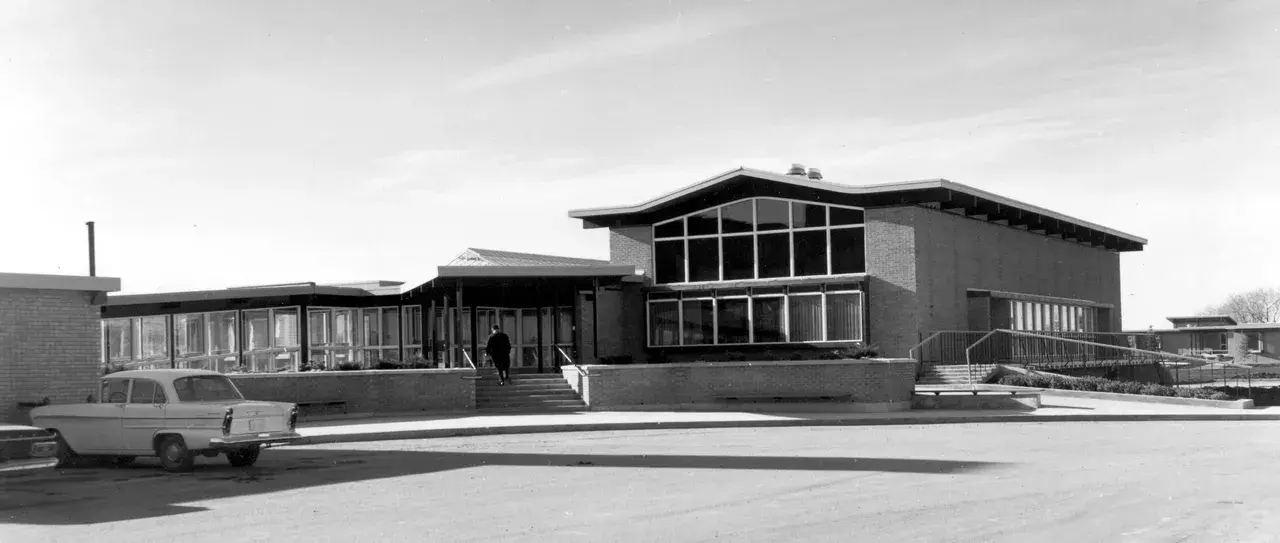
Those working in the field of psychiatry and mental health treatment across Canada and the United States came to Yorkton in 1964 and 1965 in large numbers to see for themselves how a new way of treating mental health patients was being implemented at the new Yorkton Psychiatric Centre.
The new facility was a radical departure from what had been standard mental health treatment facilities in Saskatchewan: large impersonal buildings at Weyburn and North Battleford that, from the outside, could easily be mistaken for jails.
The new Yorkton Psychiatric Centre came about in large part to a new way of thinking within the provincial government, and the work of an architect who went to some lengths to understand the mindset of patients with those issues.
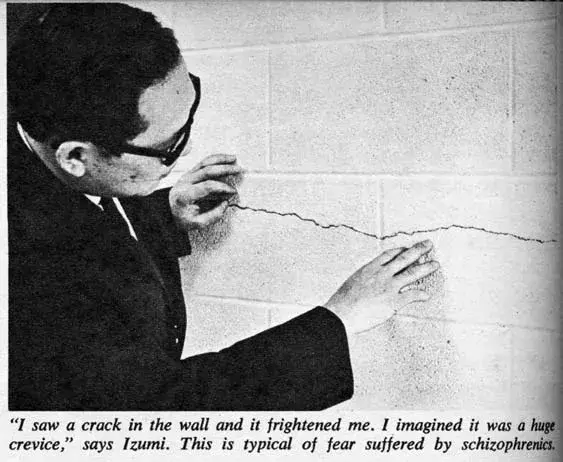
The Regina-based architect Kiyoshi Izumi (photo, taken at the entrance to the Yorkton Psychiatric Centre) had experimented with LSD in the late 1950s, long before it became part of the lore surrounding Timothy Leary and the 1960s "turn on, tune in, drop out" counterculture. He used his LSD experience to try to replicate the mindset of the mentally-ill so he could design a facility that was not a frightening place for psychiatric patients.
His ideal design was not adopted by the provincial government for Yorkton -- it was felt too many practical obstacles stood in the way. But a version of it was built, and remains there west of the hospital on Bradbrooke Drive.
It was cutting edge. In fact, this year (2025), more than 60 years after it was built, it was one of three recipients of the Prix du XXe Siecle (Prize of the 20th Century) award, an honour bestowed by the Royal Architectural Institute of Canada and the National Trust for Canada to recognize "significant modern Canadian architecture from the 20th century".

Spaced Out in Saskatchewan: Modernism, Anti-Psychiatry, and Deinstitutionalization, 1950-1968 by Erika Dyck, published in the Bulletin of the History of Medicine (PDF)
Kiyoshi Izumi: Contributions to Rethinking Hospital Architecture and Design, by Erika Dyck, for a retrospective of the work of Izumi at the MacKenzie Art Gallery in Regina, September 2024 to January 2025.
Dr. Erika Dyck biography, University of Saskatchewan website
An Archeology of Madness, a 2004 video by 3rd Eye Media which explores the abandoned Weyburn Mental Hospital where the word psychedelic was coined. Travel through the long corridors and emotionally charged rooms as they uncover the hospital's history, myths and legends.
Wonder Drug: LSD in the Land of Living Skies, a book by Hugh Goldring based on the research of Erika Dyck.
Spring on the Prairie: Kiyoshi Izumi and the work of Izumi Arnott and Sugiyama, on the MacKenzie Art Gallery website about their exhibition in fall of 2024 and early January 2025.
Kiyoshi Izumi: Saskatchewan Nisei architect, a two-part article in Discover Nikkei, a website about Japanese emigrants worldwide. It is a project of the Japanese American National Museum in Los Angeles.






Kristopher Grunert was born and raised on the family farm on Orkney Road, a short drive northwest of Yorkton. His parents, sister and he lived on land first established as the Grunert homestead in 1888.
Farming, however, was not in Kris’ future. As a teenager he developed a keen interest in skateboarding, then a relatively new sport in Yorkton, and that led him to Vancouver to pursue that dream.
As it turned out, the skateboarding dream clashed with reality, but it did lead to a career and wide recognition in the field of photography that now spans 25 years, in which time he has won numerous international photography awards, has worked for large corporations and architectural firms, and has shown his work around the globe.
Kris is now back in Saskatchewan, with his wife, where they have expanded their business and struck out in several new directions.


Cpp. (creative project partners) website about Kris and his wife Mar's new business in Regina, in which you can find more information about Cpp, more images of some of the projects shown above and others, as well as information about other services Cpp provides.
kristophergrunert.art is a new website featuring Kris' personal photo art including the artist's statement and more information, including the story of the Ascension of Dumont Dune, which we talk about in the podcast.
grunertimaging.com is Kris' original website with more examples of both his commercial work and his personal photo art.
His social media:
Dr. Sigridur (Sigga) Christianson Houston and her husband Dr. Clarence Joseph (CJ) Houston operated a medical practice in Yorkton for nearly 50 years, after a year in Watfort City, North Dakota. Both were graduates of the University of Manitoba College of Medicine.
In their practice in Yorkton, she had a well-known and well-deserved reputation to make babies thrive, which brought mothers and children from a hundred or more miles away.
What most people at the time did not know was this: when she graduated medical school in 1925, she was only the fourth woman of Icelandic descent to become a doctor, and the first Icelandic-Canadian woman to achieve that. Although we haven’t been able to verify this, she was very likely also the first female doctor to practice in Yorkton.
Not to forget about the secret she kept for most of her life. And the bean soup recipe.
Book of Life: Houston, Dr. Sigridur (Sigga) Christianson, on the website of the Iceland Heritage Museum website, Gimli MB.
Honouring Sigridur Augusta Christianson Houston, M.D., on icelandicroots.com, an Icelandic genealogy site in Fargo ND USA.
Brief writeup about Dr. CJ Houston on the University of Regina Encyclopedia of Saskatchewan website.
Biography of his mother written by Stuart Houston, for Logberg-Heimskringla, an Icelandic publication in Winnipeg and archived on an Icelandic website.
C. Stuart Houston on Wikipedia.


Sigga's Icelandic bean soup recipe
Sigga and CJ would visit the Stuart Houston family at Christmas time and Sigga would make a large pot of bean soup to feed the bird counters when they returned from spending Boxing Day in the countryside to do the annual bird count, a tradition that continues today.
See the Saskatoon Nature Society website.
Margaret got the recipe from her grandmother years ago, and passed it on for us to include here.
Lamb is an integral ingredient in this Icelandic recipe. At present there are about 500,000 sheep in Iceland, down from a high of almost 900,000 in the late 1970s. Back then, sheep outnumbered people about 4 to 1, a ratio that is now closer to 1.5 to 1.
Sigga's Icelandic bean soup
Always made in a huge roaster in the oven and served to the freezing cold Boxing Day bird counters in Saskatoon.
2 cups navy beans (soak overnight and drain)
1 pound beef (a cut with bone provides more flavour)
1 pound lamb (again, with bone in is ideal)
4 cups or more as needed water (could use some beef broth)
2 onions, chopped
Salt and pepper to taste, add after beans are cooked.
Preheat oven to 350 degrees F.
Brown meat, put in large roaster with water to cover and chopped onion.
Leave in oven till beans are cooked and meat is falling off the bone.
Remove bones and break meat into smallish chunks.
Add water or broth as needed to maintain texture of a thick soup.
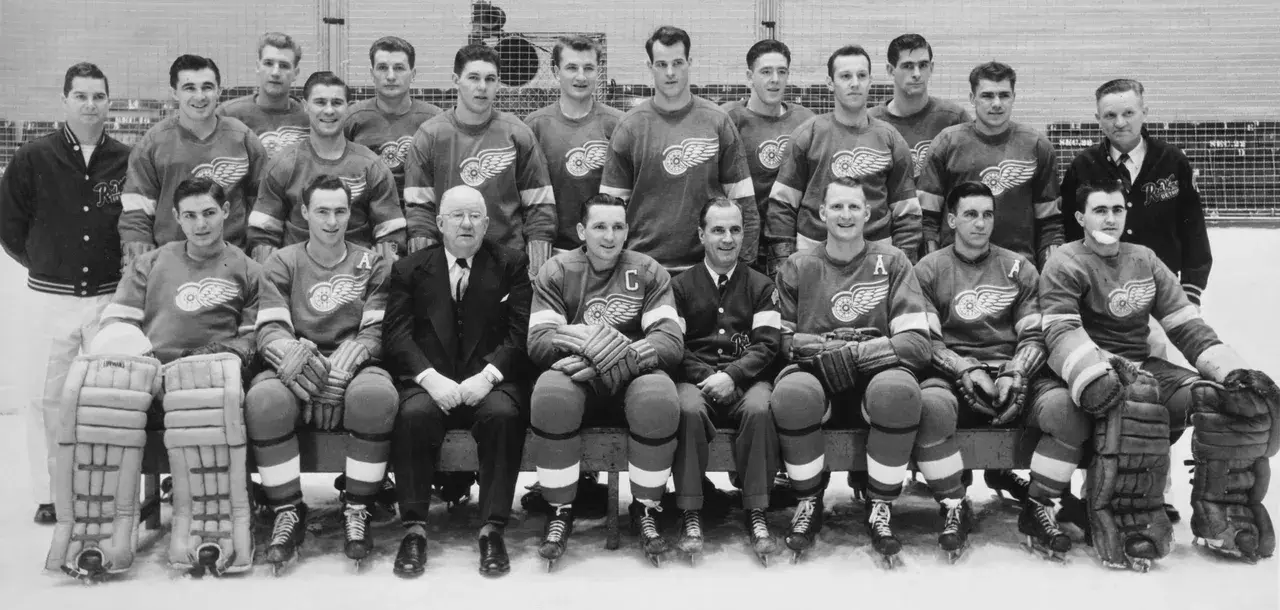
The hockey career of Yorkton’s Metro Prystai has been well documented. He had a storied career with the Chicago Blackhawks and Detroit Red Wings over a span of 12 years in the 1940s and 50s, scoring the Stanley Cup winning goal for the Red Wings in the 1952 finals, back when there were only six teams and only the very best made it to the top, let alone the Stanley Cup playoffs. He won two Stanley Cups with Detroit, and was named to the NHL All-Star team three times.
He was not the first with a Yorkton connection to make it to the NHL; he was one of several dozen. But he was Yorkton’s own, born and raised in a house on Ontario Avenue close to St. Mary’s Church, the second-youngest of seven children born to Harold and Annie Prystai, Ukrainian immigrants.
Metro and most of his contemporaries have passed on. But in 2003 he sat down with Terri Lefebvre Prince, then the city archivist, and they recorded two hours of conversation during which Metro reflected on his life.
And Frank Block wrote and recorded an audio book, The Metro Prystai Story, in 2015. With the permission of both the City of Yorkton and Mr. Block, we have used those audio files, as well as information gleaned from online sources, for this podcast remembering the life of Metro in and outside hockey, much of it in his own words, with insights from those who knew him well.
Saskatchewan Sports Hall of Fame
The Metro Prystai Story audio book by Frank Block
Remembering the life of hockey legend Metro Prystai, by Frank Block, published in The News-Review October 16, 2013




When it comes to Yorkton sports dynasties, Yorkton volleyball teams and players of the 1980s stand out.
Senior hockey had a good run with the Terriers winning three league titles and four provincial championships between 1967 and 1972. But nothing compares to the boys’ volleyball teams of the 1980s and the players, all 18 and under in age. Most were coached by Dennis Pomeroy, who became a legend in the sport. The Yorkton Regional High School Raiders boys teams won nine consecutive provincial championships in that decade, and the male club teams – the Macs -- had their share of successes.
For many of the male players, volleyball stuck with them, and they stuck with volleyball. Of the 19 players who formed the 1982 juvenile (age 18 and under) and midget (age 16 and under) Macs, six are still very actively involved in the sport as coaches, referees and officials, as are others from later 1980s.
The girls teams did not receive the same level of attention as their male counterparts -- they flew somewhat under the radar. But that same decade was the start of outstanding volleyball success for one player, the pinnacle of whose career was playing for Canada in the 1996 Olympics.
We talked with four men and two women who were part of those successes, and who are still active in volleyball 40-plus years later.
North Caroline A and T University women's volleyball
Video vignette courtesy Yorkton Sports Hall of Fame


We haven't asked Siri, the Apple virtual assistant, about forensic pathology, but we did ask Alexa. No, not Siri's counterpart at Google, but Alexa Haider, who graduates this spring after four years of studies at Trent University in Peterborough, ON.
I know Alexa from her work at Deer Park Golf Course the past two summers, and when she told me what she was studying, I was, to say the least, very surprised. It's not a field of study and employment we hear a lot about. And not something I expected to hear from a bubbly outgoing young woman who never fails to provide a cheerful welcome to golfers at Deer Park, even early in the morning.
Forensics is science-based detective work, not new to many of us familiar with such TV show titles as the CSI series, Law and Order, Criminal Minds, NYPD Blue, NCIS and going all the way back to shows I'm more familiar with -- Murder She Wrote, Columbo, Kojak and the original Hawaii Five 0.
It was the "pathology" part that got me. It is the study of diseases and causes of death. It involves things like autopsies and the examination of bodies and organs. When combined with forensics, we are talking about doing this in relation to crime. Murders. That type of stuff.
It piqued my curiosity about how high school graduates decide on careers, why she chose that after graduating from Sacred Heart High School in June of 2021, where she goes from here, and what did she think about that first autopsy?


Almost sixty years ago, when I first came to Yorkton, it was a very "white" community where the names were predominantly Ukrainian, German or British, reflecting the founding and early settlement of this part of the prairies.
Census data from the past 15 years clearly show how things have changed. In 2011, about four percent of the population of Yorkton consisted of immigrants who were born abroad and had emigrated to Canada. Five years later, that percentage was about 10, and in the latest census of 2021, it was close to 14 per cent. It is likely to be higher still when the next census takes place in 2026, given the recent influx of immigrants into Saskatchewan.
Founded by people who mainly came from the British Isles, Yorkton is now a multi-cultural community which people from as many as 60 different countries call home. We talked to seven local immigrants about their experiences coming to Canada and Yorkton, about their likes and the challenges related to that. Not surprisingly, winter weather was a recurring topic!
East Central Newcomer Welcome Centre, Yorkton
East Central Saskatchewan Immigration Partnership
Immigration, Refugees and Citizenship Canada federal government website
Immigrating and moving to Saskatchewan Saskatchewan government website
Tracking the changing population of Yorkton

Change in number of Yorkton residents born outside Canada from 2016 to 2021. These charts are based on the census of 2011, 2016 and 2021. The next census will be held in 2026.

This graph shows that the immigrant population of Yorkton has grown faster than that of Saskatchewan and Canada.

Where immigrants were born, using census date from 2016 and 2021. The next census will be conducted in 2026.

Where more recent immigrants were born. The 2016 column consists of immigrants between 2011 and 2016; the 2021 table represents those between 2016 and 2021.



Shawn Sanford Beck -- born, raised and educated in Yorkton and area -- is now a pastor with the United Church in Saskatoon with a special mission. He was an Anglican priest, a position he left due to some unresolved conflicts with that denomination.
He subscribes to and has written about Christian animism, is a member of the Order or Bards, Ovates and Druids, teaches Green Priestcraft, and considers himself a Christo-pagan. He is an author, as is his wife Janice and one son, and the family lived off the grid north of North Battleford for almost nine years before returning to Saskatoon to assume new duties with the United Church.
He is not your conventional clergyman. His intent is not to convert you. But for those interested in looking at Christianity from a different and wider viewpoint, he offers ample food for thought.
Links to a wide variety of information about "my somewhat unorthodox religious quest over the years", as Rev. Sanford Beck notes; many discussed or mentioned in the podcast.
A Prairie Rune on co-author Darcy Blahut's website Via Poetica.
Christian Animism by Shawn Sanford Beck, on Amazon.ca and on Collectiveinkbooks.com.
Living a bi-spiritual life, on the Philip Carr-Gomm website.
Green Priestcraft, video on the Christian Animism website.
GreenSpirit Chaplaincy on the website of the Ecumenical Companions of Sophia.
Green Priestcraft: A ChristoPagan Pastoralia by Shawn Sandford Beck on the witchesandpagans.com
Writings by family members
A series of six books about Life on the Trail, by Janice Sanford Beck and her father Emerson Beck.
No Ordinary Woman, by Janice Sanford Beck.
Attending to the Full Moral Landscape, a paper written by Christopher Sanford Beck of the University of Victoria, on Arbutus Review.


